At a glance
For a straightforward display where resistance to everyday scratching matters most, glass deserves a close look. Acrylic is worth exploring for curved or unusual viewing forms, provided you are comfortable with its care requirements. Compare actual material samples, cleaning instructions and the complete installed design. Neither a material label nor a promise of polishable scratches settles which aquarium you should buy.
You want the view to stay beautiful
You've chosen where the aquarium will go, and now the builder asks whether you want glass or acrylic. Both can look wonderful in a photograph. What you're trying to judge is how that choice will feel after months of cleaning, visitors and everyday life around the tank.
Start with the shape you want and the person who will look after it. If you're considering a conventional rectangular display and worry about scratches, ask to see the glass option first. If a sweeping curve is central to the idea, explore acrylic with a fabricator who can explain both the finished view and its care. Then compare the two proposals at the level of your actual project.
How worried are you about scratches?
Aqueon's glass-versus-acrylic FAQ identifies greater scratch resistance as an advantage of glass and a wider choice of shapes as an advantage of acrylic. That is a useful starting distinction, not a guarantee that glass cannot be scratched or that every acrylic aquarium will age in the same way.
Ask who will clean the inside and outside, what tools they will use and how they will reach every viewing surface. Aqueon's cleaning magnets, for example, use different pads for glass and acrylic. A tool being sold for aquariums doesn't make every attachment suitable for your tank; have the builder approve the exact equipment for its material and thickness.
If household staff or several family members may clean the aquarium, ask for labelled tools and a short demonstration. If a specialist will handle all cleaning, ask how the service team protects the panels and records existing marks. Either way, make the care routine part of the choice before ordering.
Look at the view you are actually buying
Request samples of the proposed material and, where possible, a visit to a comparable filled aquarium. Look from the sofa, standing nearby and from the side. Ask the builder to explain which edges, seams and supports will remain visible once the surround is finished.
Custom Aquariums offers a low-iron glass option for improved optical clarity. If that upgrade appears in your quote, ask which panels receive it and compare samples with the standard glass being proposed. An upgrade on a side you rarely see may have a different value to you than one on the main viewing face.
For a curved acrylic concept, ask to see a completed example with a similar viewing shape. A small flat sample helps with material appearance, but it cannot show you the whole experience of looking through the proposed curve. Don't approve that part of an ambitious design from a rendering alone.
Polishable does not mean effortless to repair
Reynolds Polymer describes professional acrylic services for scratches, haze and other surface wear. It recommends specialist assessment for deep or widespread marks. That gives you a useful question to ask: if this particular viewing panel is marked, what could restoration involve at your home?
Have the fabricator explain access, possible disruption, who assesses the damage and whether livestock or surrounding finishes would need special arrangements. Get a written answer about warranty conditions. Reynolds' Acrylic 101 guidance says repairs to its material must be handled by its professionals to preserve its warranty; your proposed manufacturer's terms need their own review.
Treat future restoration as a possibility to investigate, not a promise that every mark can be cheaply removed. Likewise, ask the glass supplier what happens if a panel is damaged. The person selling the aquarium should be able to describe the service path without assuming that replacement will be simple.
Compare the complete aquarium, not a panel price
Give each bidder the same desired view, room location and care brief. Ask them to show the tank, support, access openings, delivery plan, installation and surround work in the comparison. Have the responsible professionals establish the structure and handling requirements; a general claim that one material is lighter doesn't establish whether your floor or delivery route is suitable.
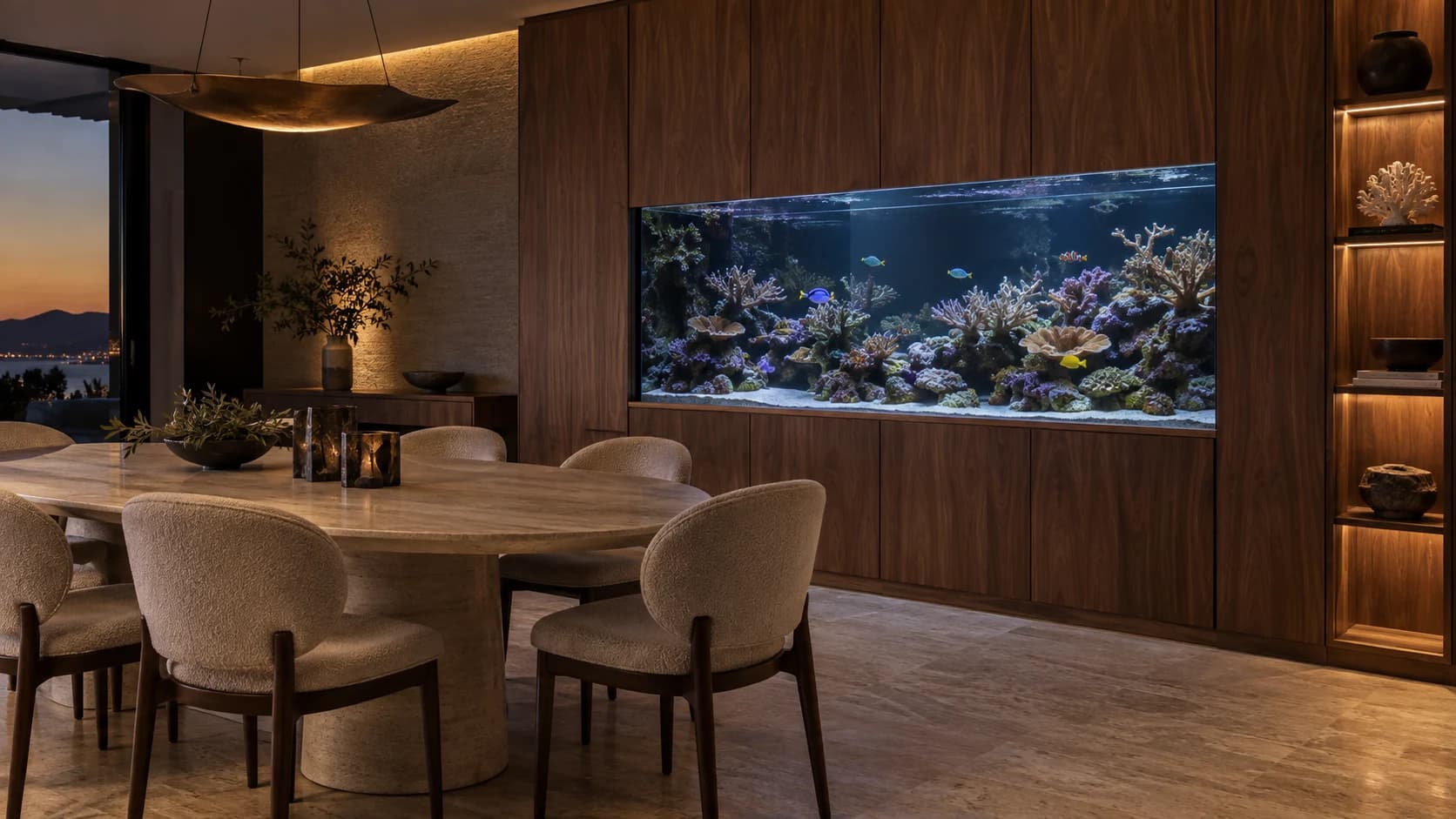
Say you want an aquarium built into a living-room wall. One proposal may offer the viewing shape you prefer but leave a cleaning corner difficult to reach. Another may change the visible opening to accommodate its construction. Ask to see those differences on the drawings before deciding which price represents better value.
If the quote only says glass or acrylic, it isn't specific enough to approve. Ask for the proposed material specification, visible panel arrangement, manufacturer, care instructions and warranty. Our proposal and structural-feasibility guides cover the wider project checks.
Choose the tradeoff you can happily live with
Put your priorities in order: the view, the shape, resistance to everyday marks, the care routine and the help available if something goes wrong. Ask the builder to explain its recommendation against those priorities. There doesn't need to be one winning material for every aquarium; there does need to be a convincing choice for yours.
Our vetted experts know the field and bring experience and relationships with providers. Tell us where the aquarium will sit, the shape you're considering and who will maintain it. We can help you prepare a focused conversation about the material and the ownership arrangements.