
At a glance
An automatic feeder can be a useful purchase when your aquarium specialist confirms that its food and delivery method suit the planned livestock. Compare a standalone feeder with a controller-linked option, then include fitting, setup and a demonstration in the quote. Keep a person responsible for checking the animals and equipment; scheduled feeding does not replace aquarium care.
You want the aquarium to fit around your life
You'd love the display, but your working day doesn't always end at the same time. An automatic feeder sounds like an easy way to keep one daily task from depending on whether you're home. The question is whether it belongs in your custom aquarium order or adds equipment you won't really need.
We'd consider it when the specialist can show how it fits the planned animals, food and finished enclosure. Start there before choosing between a simple timer and a connected system. A feeder buys a particular feeding function; it doesn't buy someone noticing how the fish are doing.
Choose around the food before the features
Tell the aquarium team which livestock you hope to keep and ask whether the proposed feeder can deliver the food that team recommends. Have the specialist explain any feeding tasks that would remain manual. A device advertised for aquariums is not automatically suitable for every animal or diet.
EHEIM describes its standard autofeeder as a programmable unit with an aerated food chamber, mainly for flake food. Neptune Systems says its Automatic Feeding System handles pellets or flakes. These are concrete product examples, not evidence that either will meet the needs of your proposed livestock. Don't treat a feeding schedule as a substitute for that assessment.
Would a standalone feeder do enough?
A standalone model is worth comparing when you want scheduled dispensing without buying into a wider control system. EHEIM’s standard model uses batteries and includes a mounting bracket for an open-top aquarium. Ask the installer how the chosen model would fit your actual tank and how someone would reach it after the cabinetry is finished.
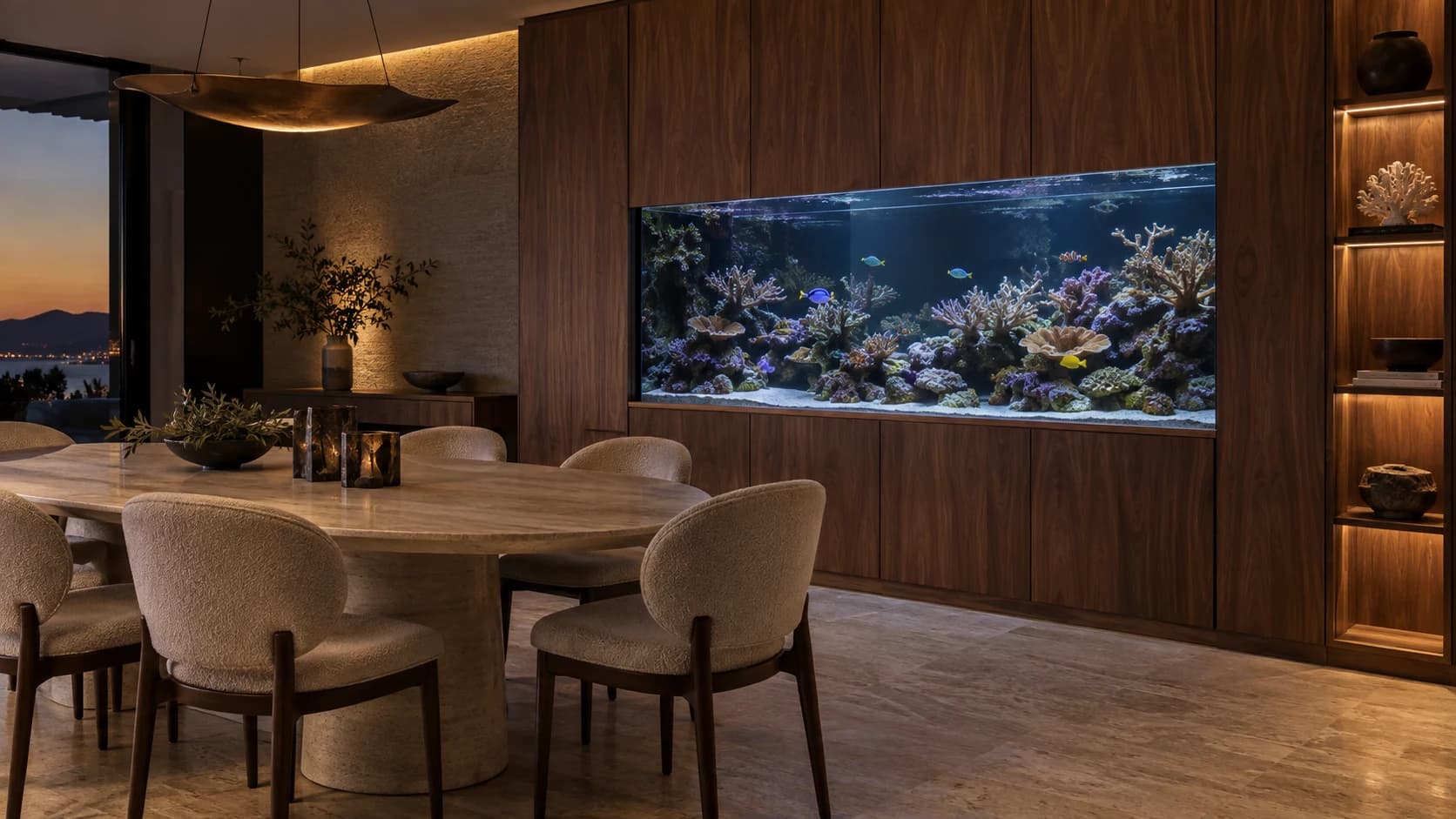
Picture the feeder above a living-room aquarium enclosed by bespoke millwork. Its screen and food chamber may need access that wasn't obvious in the original elevation. Ask to see where it sits, what remains visible and how the owner or maintenance firm would replenish and care for it. Settle that before approving the finished enclosure.
What does controller-linked feeding add?
Neptune’s AFS connects to an Apex controller through AquaBus. The manufacturer describes linking feeding with other equipment operations. That makes an integrated option worth discussing when an Apex system is already part of the design, rather than comparing feeder prices alone.
Ask whether the quoted configuration includes the compatible controller, connection, mounting and setup. Have the aquarium specialist determine any equipment coordination and demonstrate the owner-facing controls. Don't copy a manufacturer’s example sequence into a different aquarium: the installer needs to explain the arrangement appropriate to your system.
If you're buying a controller largely to support feeding, ask what else you actually want it to do. The complete purchase may be harder to justify than a standalone feeder and a clear care arrangement. If the controller is already justified for other functions, ask for the incremental feeding scope separately.
Include the work around the device in the price
Request a line for the feeder and a description of fitting, configuration, demonstration and follow-up. Confirm whether those tasks belong to the aquarium builder or the maintenance company. A box supplied with the tank is a different purchase from an installed option someone has agreed to support.
Ask the team to demonstrate the selected feeder with the actual food and installed arrangement before relying on it. The specialist should set the appropriate quantity and schedule; your part is to understand the controls and the responsibilities. Find out who deals with low batteries, replenishment, unsuitable dispensing or a changed livestock plan.
Keep the care plan even when feeding is automatic
If you travel, agree who will check the aquarium while you're away and who can respond when something looks wrong. Ask the specialist what the feeder does during a power or connection problem and which checks still need a person. Avoid assuming that a connected device proves food was eaten or that every problem produces an alert.
You may also enjoy feeding the fish when you're home. Tell the team so it can explain how your routine and the programmed feeding would work together. The useful option is one you understand and will use, with a care plan that remains clear when your plans change.
Bring the feeder decision into the design conversation
Share how often you are away, whether you enjoy feeding and how involved you want to be between service visits. Ask the designer to compare the complete standalone and integrated options against that brief. We’d choose the simpler arrangement that meets the specialist’s requirements and your ownership preferences.
Our vetted aquarium experts bring field experience and provider relationships to that comparison. Submit an inquiry with your planned display and the daily task you want help with; they can help you clarify the equipment and service questions before you order.