At a glance
Before taking over a custom aquarium, ask the installer to demonstrate the completed system, explain what is ready now and what still needs specialist attention, and train the people who will look after it. Collect the equipment records, operating instructions and open-item list. Agree who decides when livestock can be introduced and who owns care during the transition; installation day alone does not answer those questions.
The tank is in, but are you ready to take over?
After months of drawings and building work, the aquarium finally looks like the one you imagined. The cabinetry is finished and the team is packing up. You want to enjoy it, but you also want to know what happens tomorrow when no one is standing beside you to explain the controls.
Arrange a dedicated handover before that moment. You should leave knowing what has been demonstrated, what you are expected to do and who is responsible for the next stage. A clear handover makes the first weeks of ownership less dependent on remembering a hurried conversation in a busy room.
Ask what the team means by finished
Have the installer separate completion of the physical installation from system startup, owner training and the planned introduction of livestock or plants. Ask which milestones have been reached, what evidence records them and what work remains. The answer should match your agreed scope.
Tenji, for example, describes commissioning with operations and maintenance manuals as part of its construction-administration service. That gives you a useful question for your own firm: what checks and documents will accompany this particular installation? It does not establish a standard package that every builder provides.
If the aquarium is being finished for a party or a move-in date, make the desired appearance clear early. Ask the specialist what can responsibly be ready by then. Keep livestock timing with the aquarium team rather than treating a social deadline as proof that the system is ready.
Walk through an ordinary day together
Ask the person who will actually care for the aquarium to attend. That might be you, a household manager or a separate maintenance provider. Have the installer demonstrate the owner controls and the tasks agreed for that person, then give them a chance to repeat those tasks with supervision.
The useful question is simple: what will I need to recognize or do before your next visit? Have the team explain normal operation in plain language and identify the signs that should prompt a call. Get system-specific instructions rather than improvising adjustments from a general aquarium checklist.
If alerts or remote access are included, ask for a demonstration of the agreed owner-facing functions. Confirm who receives alerts and who acts on them. Arrange account handover through the provider's normal secure process, and make sure the relevant person can use it before the team leaves.
Check the finished room as well as the display
Invite the aquarium installer and whoever owns the cabinetry or building work to walk through the final installation together. Ask them to show that the agreed service openings and equipment access remain usable with the finishes in place. A drawing approved months ago cannot show whether a later shelf or trim change now obstructs that access.
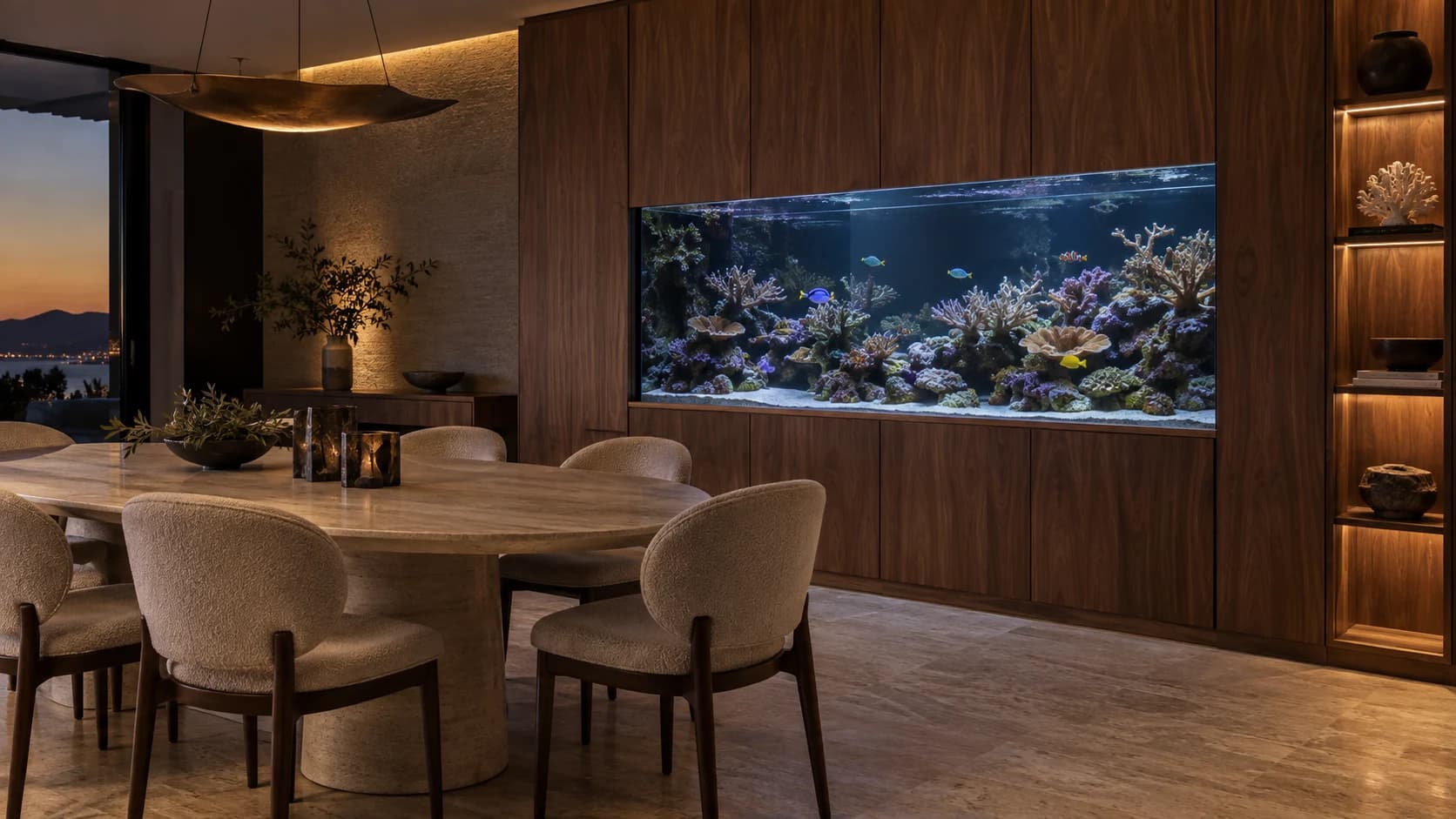
Take a living-room installation with custom doors beneath the tank. The doors may look excellent when closed, yet the maintenance firm still needs to show how it will reach the equipment it has agreed to service. Resolve that practical question with the project team before it becomes a disagreement between trades.
Record any incomplete trim, missing labels or other open work with a named contact and an agreed follow-up date. Keep technical checks with the responsible specialists; an owner's walkthrough is a chance to understand their work, not to certify it yourself.
Make the transition to ongoing care explicit
If the installer and maintenance provider are different firms, arrange a direct handoff. Confirm who looks after the aquarium between installation and the first routine visit, who approves stocking decisions and whom you contact if something changes during that interval.
Keep the equipment list, manuals, agreed commissioning records, warranty information and service contacts together. Ask which documents describe your installed configuration and which are general product literature. Where a substitution was agreed during construction, the final record should identify what was actually fitted.
You do not need a binder so complicated that no one opens it. Ask for a short owner guide alongside the detailed records, and keep the open-item list separate so unfinished actions remain visible. Discuss acceptance and payment milestones against your own agreement before signing anything you do not understand.
Leave with a plan you can explain back
Before the visit ends, explain the next week back to the installer: who is caring for the system, what you will do, what happens next and whom you call. Any uncertainty that appears during that conversation is worth resolving while everyone is still involved.
Our vetted experts can help you prepare those questions using their field experience and relationships with providers. Tell us where the project stands and which part of taking over still feels unclear, whether you are approaching installation or choosing a builder now.