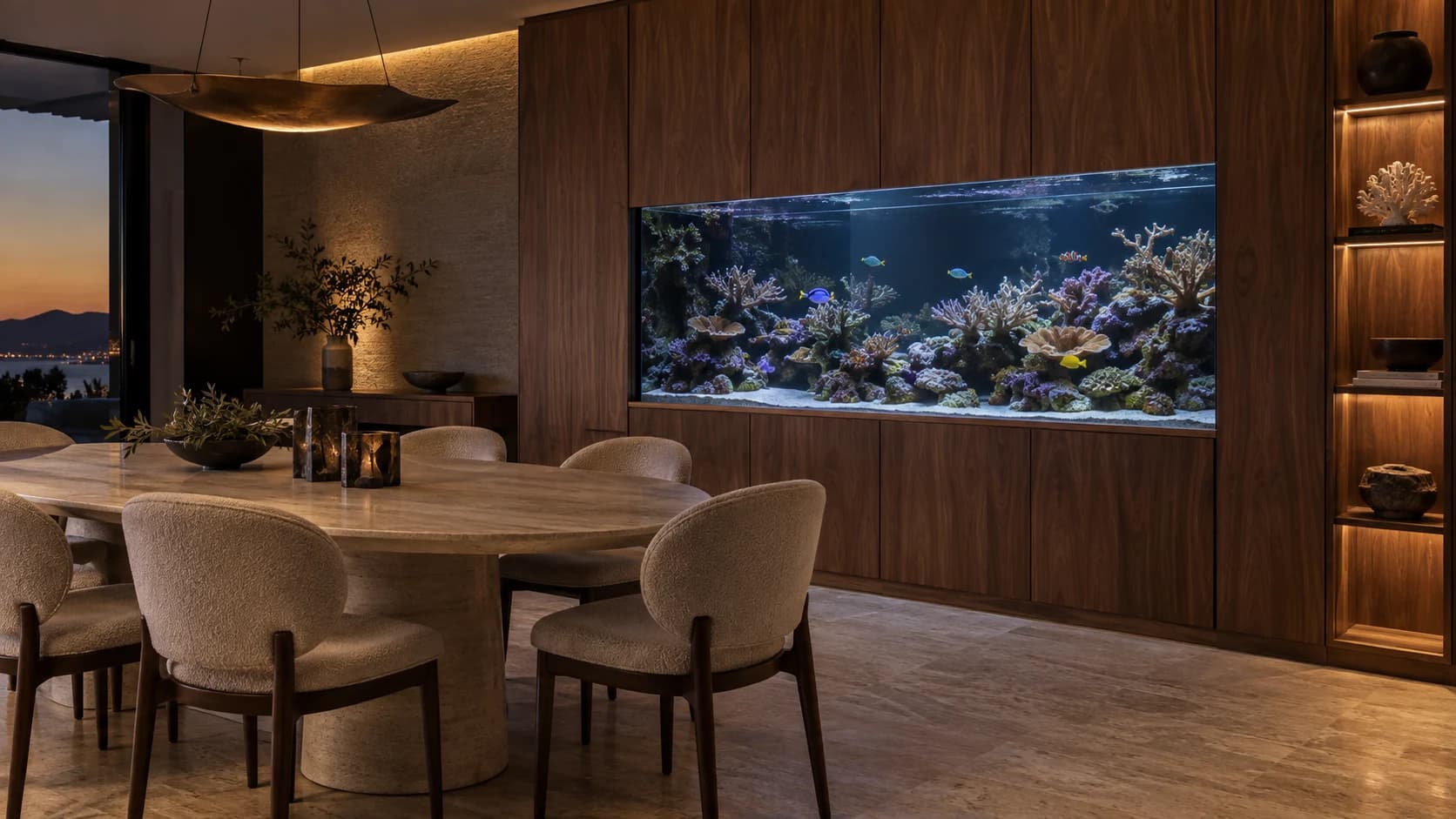
At a glance
Use this checklist with your builder before approving the design or fabrication. For each item, record the agreed scope, the person responsible, its status, and the next decision date. Leave an item open until the relevant person confirms it in writing.
1. Agree on the aquarium brief
Record the room, viewing positions, intended fish or plants, proposed dimensions, and finish references.
Confirm the budget, desired timing, decision-maker, and whether the work is part of a larger renovation.
Name the person or company providing routine care, including what the owner will do between visits.
2. Check the site and building work
Assign the structural assessment and any required building approvals to the relevant professionals.
Mark the delivery route, tank and equipment locations, service openings, and replacement route on the drawings.
Identify who designs and provides electrical work, plumbing, drainage, ventilation, moisture control, and finishes. EPA guidance supports resolving moisture and leaks promptly; include an accessible response plan.
3. Confirm what the aquarium proposal includes
List the display, support, filtration and other life support, lighting, controls, and water-preparation equipment.
Identify cabinetry, delivery, lifting, installation, testing, commissioning, and livestock or plants as included, optional, excluded, or supplied by another party.
Write down allowances and outstanding selections, with the person responsible for confirming each one.
4. Resolve changes before fabrication
Confirm the drawing revision used by the aquarium fabricator, millworker, and building team.
Have the responsible team confirm dimensions, site readiness, delivery access, and equipment clearances.
Agree who approves changes and how the team records any effect on cost, timing, or another contractor’s work.
5. Prepare the handover and care plan
Collect the equipment list, operating instructions, warranty information, service contacts, and agreed test or commissioning records.
Confirm who introduces livestock or plants, provides training, and handles the early care period.
Record routine visit frequency, owner tasks, consumables, monitoring responsibilities, emergency contacts, and excluded replacement costs. Keep any unfinished actions beside a named owner and due date.