
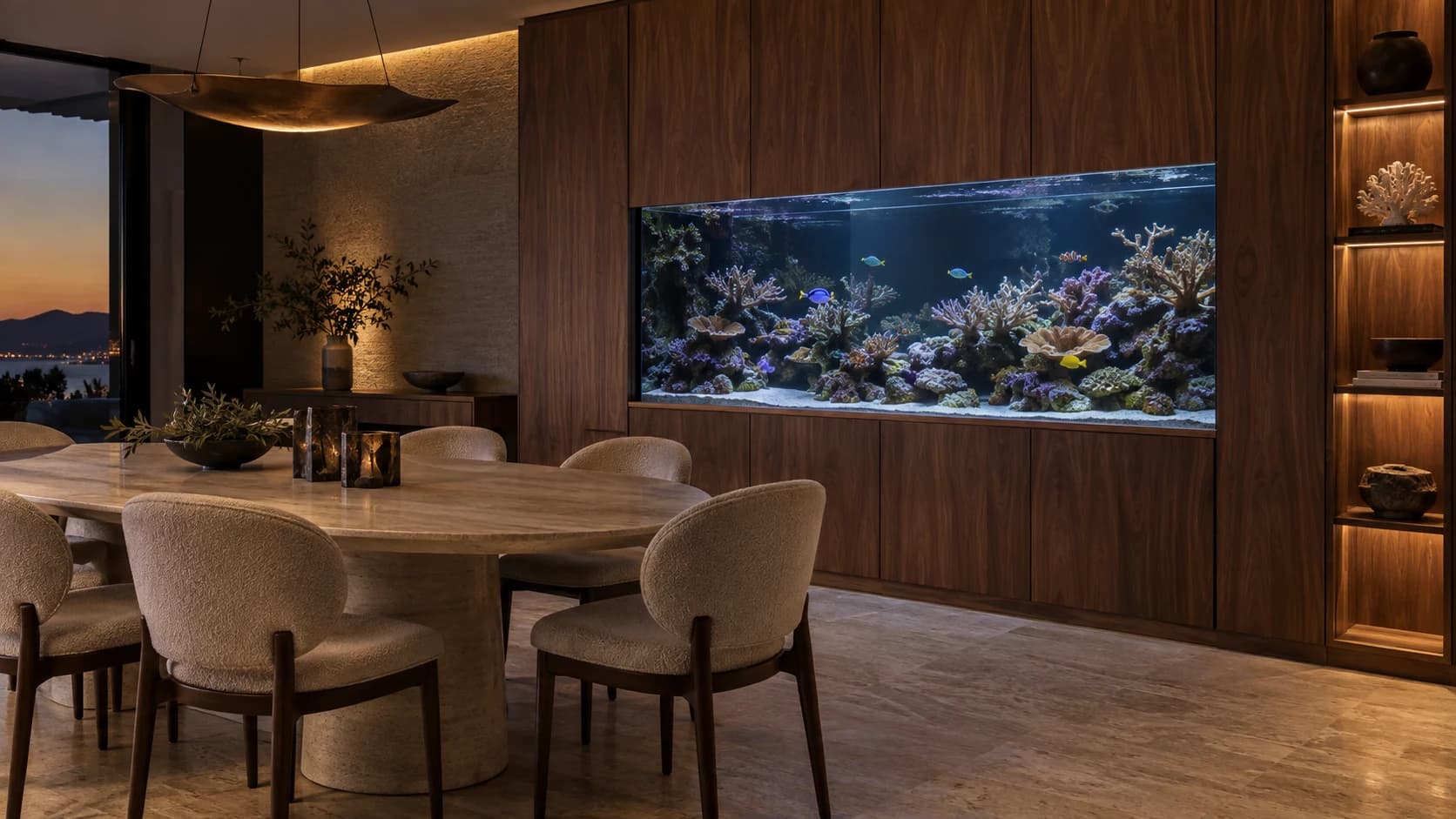
At a glance
A custom sump is worth considering when your aquarium specialist can identify a requirement that a suitable standard model cannot meet, such as an agreed equipment layout or service-access constraint. A custom display tank does not automatically need every component made to order. Compare a suitable standard model, an approved modification and a bespoke design against the same brief, including installation, commissioning, maintenance access and replacement. Leave hydraulic design and suitability with the responsible aquarium professional.
The display is bespoke. Does everything underneath need to be?
You have chosen a custom aquarium because the room deserves something that fits beautifully. Then the equipment proposal includes a custom sump, and you wonder whether that is another necessary part of the design or a premium you could reasonably avoid.
A sump is a separate vessel used within the aquarium system, commonly to house filtration equipment. We would pay for a bespoke one when the specialist can show what a suitable standard model cannot do for your agreed project. Ask to see that comparison before assuming a custom display requires a completely custom equipment package.
Start with the job, rather than the label
Have the aquarium specialist describe the equipment the sump must accommodate and the care arrangement it will support. Ask for the actual proposed model and layout. A label such as custom filtration does not tell you whether you are buying a made-to-order vessel, a standard vessel with selected equipment, or a modification to a standard product.
Bashsea, for example, publishes a standard Signature Series range with several sizes, adjustable features and equipment-related fittings. The same manufacturer advertises customization through to complete system development. These are real purchasing routes, not proof that any particular model suits your aquarium. Ask your designer which route meets the brief and why.
Do not compare the total aquarium volume with a catalogue headline and choose a sump yourself. The responsible professional must confirm the complete system requirements, including operating conditions and what happens when equipment stops. You are comparing the proposed purchases after that assessment.
What does the extra money change at your home?
Ask the supplier to point to the specific constraint a custom design resolves. It might be the agreed equipment arrangement or a cabinet opening that makes a standard layout awkward to service. Have the project team show the difference on the actual drawings, rather than treating a smaller external footprint as sufficient evidence of a better fit.
Say a standard model fits inside the cabinet, but the proposed layout leaves a routine replacement item difficult to reach. Ask whether a different suitable standard model, a revised cabinet opening or an approved customization resolves that issue. A fully bespoke vessel is one option; it should earn its place against the alternatives.
Keep appearance separate from the working requirement. A coordinated colour may appeal to you, but it is a different reason to pay more than an access improvement you will use at every service visit. Have the quotation identify what you are actually choosing.
A good fit includes the next service visit
Ask the person who will maintain the aquarium to review the proposed layout before fabrication. Can they perform the agreed routine, remove service items and reach the relevant connections through the finished access openings? Have them explain their requirements to the project designer.
Also ask how the sump itself could be replaced in future. A vessel that enters before the surrounding joinery closes may have a different removal route afterward. Let the project team establish a workable replacement arrangement and describe any building work that would be needed.
A bespoke layout should come with an agreed record of what was supplied. Ask who retains the final dimensions and approved configuration, who supplies replacement parts and how a later service firm would obtain the information it needs. Custom does not automatically mean difficult to replace, but that question deserves an answer before ordering.
Compare complete proposals, not two empty vessels
Request a comparison against the same equipment and service brief. Separate the vessel price from design, any approved modifications, delivery, installation, required connections and commissioning. Identify which firm is responsible for making the complete arrangement work.
If a standard model needs extra fittings or building changes, include them in its proposal. If the bespoke price excludes equipment or installation, include those too. Ask each firm to explain lead time, design approval, change charges and what happens if the delivered item differs from the approved order.
Do not assume a custom purchase will reduce maintenance bills or produce better water conditions. Ask the care provider what, if anything, changes in its proposed work and charges. If the benefit is easier access, judge that stated benefit rather than adding an unverified performance promise.
Choose the requirement you can explain
Choose a suitable standard model when the specialist confirms it meets the agreed system and access requirements. Consider an approved modification when it solves a particular limitation. Pay for a bespoke design when the remaining requirement is clear and the complete price and ownership arrangements make sense to you.
Our vetted aquarium experts bring field experience and relationships with providers to help you understand the equipment choices in a custom project. Share the competing proposals and the requirement each supplier says it is solving. The useful next conversation is about your complete aquarium, with its responsible designer and future care team involved.