
At a glance
Start with the room where you actually spend time and the position from which you want to watch the aquarium. Compare that everyday view with the entrance or feature-wall location you first imagined. Then have the aquarium designer and relevant building professionals assess light, sound, servicing and structural feasibility before you commit to the position.
A spectacular entrance is only one way to enjoy it
You can picture the aquarium as soon as someone opens the front door. It's a wonderful first impression. But if you pass through that space in seconds and spend your evenings elsewhere, you may be buying a view your guests enjoy more than you do.
Choose the location by imagining an ordinary week. Where would you stop and watch? Start with that room and compare it with the dramatic entrance option. A display beside your favorite chair can be a better personal purchase than a larger one you rarely sit near.
Decide whose view matters most
Mark two or three viewing positions on a rough plan: a sofa, the dining table and perhaps the route into the room. Ask the designer to show the proposed water display from those positions, with your furniture in place. A rendering made straight in front of the tank can conceal an awkward everyday angle.
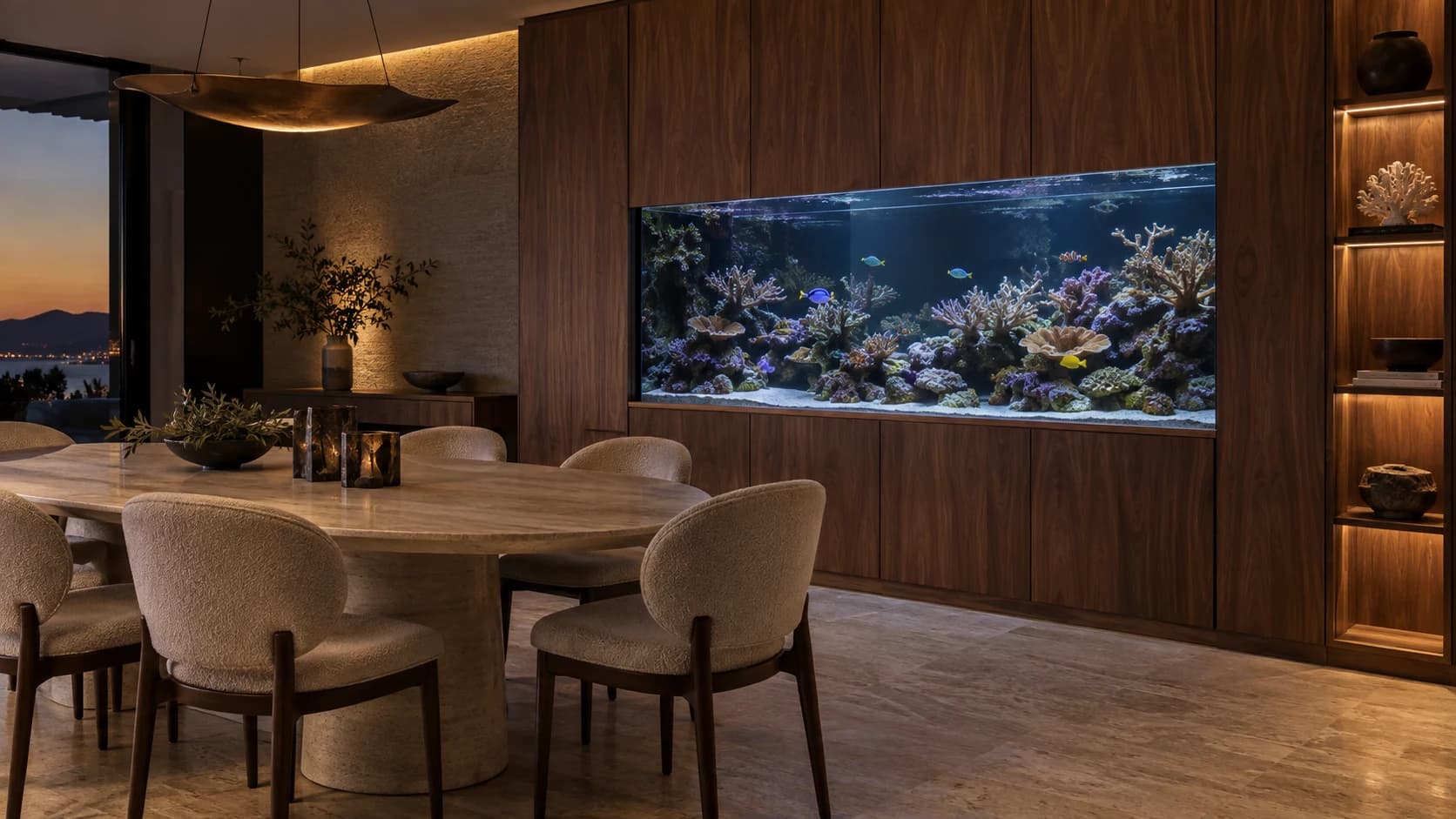
Say you want to see the aquarium during dinner. Check the view while seated, including the table, chair backs and other people. Then stand where visitors would approach. Aquarium Architecture's location guidance specifically raises the challenge of satisfying seated and standing viewers; ask your designer which view the proposed height prioritizes.
If two rooms share the display, decide whether both deserve an equally finished view. Show the designer what you want to see through it as well as inside it. Our in-wall and room-divider overview covers the integration questions once that preference is clear.
Match the display to the hours you are home
Tell the designer when you usually use the room. An aquarium you want to enjoy after dinner needs a different conversation from one in an office you leave each afternoon. Ask how the intended livestock and lighting plan can fit that routine; don't assume you can simply leave the display brightly lit whenever you want.
Aquarium Architecture discusses coordinating a display's lighting cycle with evening viewing where conditions allow, and cautions against direct sunlight or strong daylight at the proposed location. Take photographs at different times of day for the design discussion. Curtains in a presentation image don't establish that the living system will suit the actual window exposure.
Ask to see the proposed view with the room's own lights on, too. You are choosing something you will live beside, so it is reasonable to discuss the evening atmosphere before cabinetry and lighting are finalized.
Be honest about quiet rooms
If the bedroom is your favorite idea, explain what quiet means to you. Do you sleep with everything switched off? Would equipment sound bother you while reading? Aquarium Architecture notes residual equipment noise as a bedroom consideration. That is a reason for a project-specific discussion, not a dependable sound level for your home.
Ask for a comparable installation you can experience with permission and for the designer's explanation of the proposed equipment arrangement. A showroom visit can help you describe your tolerance, but it cannot predict sound through your walls. Keep any acoustic assessment with the qualified project team.
Give the service visit a place in the plan
Imagine someone arriving to maintain the display while the room is in use. Where do they work, and what furniture has to move? Ask the designer to walk through access to the tank and equipment from the proposed location. A beautiful view loses some appeal if every service visit requires dismantling the room around it.
Treat location preference and feasibility as separate decisions. Your preferred wall still needs the relevant structural assessment, complete-system information and building coordination. Don't order the tank because a sketch looks convincing. Use our structural-feasibility guide to prepare that next conversation.
Bring two locations to the first conversation
You don't need to solve the design before asking for help. Bring your favorite location and one alternative, the places you normally sit and the hours you expect to enjoy the aquarium. Ask for a comparison that explains both the view and the work each option needs.
Our vetted experts bring field experience and relationships with providers. We can help you turn a room you love into a useful starting brief, so the eventual aquarium feels like part of your life rather than something you walk past.